

Fall 2026 Respiratory Season: COVID-19, Flu and How to Stay Well
Sept 30, 2026 · by Dr O. Archie
Reading time: 6–8 minutes · Public Health • Prevention • Integrative Wellness
Person with flu
What's happening right now?
COVID-19's late-summer wave appears to be leveling off, while flu season hasn't started yet. Now is a good time to get prepared.
In late August, the CDC reported COVID-19 infections growing in nearly every state (AAMC). By September 23, 2026, the picture had shifted. The CDC now estimates infections are (CDC Epidemic Trends):
Trend:
Growing or likely growing in 14 states
Not changing in 18 states
Declining in 5 states
The CDC tracks these trends at the national, state and health service area level. A health service area is a group of neighboring counties that share the same hospitals.
The late-summer surge is now a familiar pattern. COVID-19 has settled into two waves a year, one in winter and one in late summer. Summer travel and the return to school help it spread.
The good news: COVID-19 is far less deadly than it once was. Fewer than 6,000 U.S. deaths were recorded through early August 2026, about 60% fewer than in 2025 (AAMC). Experts say the main circulating strain hasn't changed enough to escape the protection most people already have.
The caution: people at higher risk are still at higher risk. Older adults, people with cancer, and people with chronic conditions can still get seriously ill.
Which variants are circulating? As of early September, the leading U.S. variants were SW.2, XFG.1.1 and RW.1.1, all descendants of Omicron (Nebraska Medicine). A home test can't tell you which variant you have, but it will still detect COVID-19.
The flu outlook for 2026–27
Flu activity is low right now, but last season was a hard one. For the week ending September 19, 2026, only 2.7% of respiratory samples tested positive for flu (CDC FluView).
The 2025–26 season was driven mostly by influenza A(H3N2), including a fast-spreading version called subclade K. It showed up after that season's vaccine had already been designed. By mid-September, the CDC had counted 195 flu-related deaths in children for that season.
The small amount of flu circulating now is mostly H1N1. Which strain will lead this winter is still unknown. Flu season usually builds through October and November and peaks between December and February.
This year's flu vaccines protect against three strains: A(H1N1), A(H3N2) and B/Victoria (CDC).
Symptoms: COVID-19, flu or a cold?
These illnesses look a lot alike, and only a test can tell them apart for sure. Home COVID-19 tests are widely available, and some pharmacies sell combined COVID/flu home tests.
Reminder: Flu tends to hit hard and fast. A cold creeps in and stays mild. COVID can do either
Prevention: what actually helps
Everyday habits
Wash your hands often, especially before eating and after being in public.
Stay home when you're sick, and keep sick children home from school.
Improve indoor air by opening windows or using a HEPA air purifier.
Consider wearing a mask in crowded indoor places during surges, especially if you're at higher risk.
Get enough sleep, stay active and eat well. These habits support your immune system all year.
Flu vaccine
The CDC still recommends a flu shot every year for nearly everyone 6 months and older. It matters most for young children, adults 50 and older, pregnant people, and anyone with a chronic health condition (CDC).
When: September or October is ideal. Getting it later is still worthwhile while flu is spreading.
Adults 65+: a high-dose, recombinant or adjuvanted flu vaccine is preferred (AHCA/NCAL).
Egg allergy: any flu vaccine appropriate for your age is fine.
Even in years when the vaccine isn't a close match to the circulating strain, it still lowers the risk of hospitalization and serious complications.
COVID-19 vaccine
The FDA approved updated vaccines targeting the XFG variant in late August 2026. They come from Pfizer-BioNTech, Moderna and Novavax. They're approved for adults 65 and older and for younger people with a high-risk condition such as cancer, diabetes, obesity or heart disease (Medical Daily; AAMC).
Federal guidance is unsettled this fall. The CDC's vaccine advisory committee hasn't been able to meet with a full quorum since March 2026, so there's no official recommendation for this season. As a result:
Whether a pharmacy can vaccinate you without a prescription depends on your state and the store. Call ahead.
Most insurers have committed to covering vaccines the advisory committee previously recommended through 2027. Check with your plan.
If you aren't in an approved group, you can still ask your doctor or pharmacist about getting vaccinated.
Bottom line: talk with your healthcare provider about which vaccines make sense for you, especially if you're older, pregnant or managing a chronic condition.
Natural and integrative support: what the evidence says
Natural remedies can support comfort and overall wellness, but none of them prevents or cures COVID-19 or flu. Here's a fair look at what the research shows:
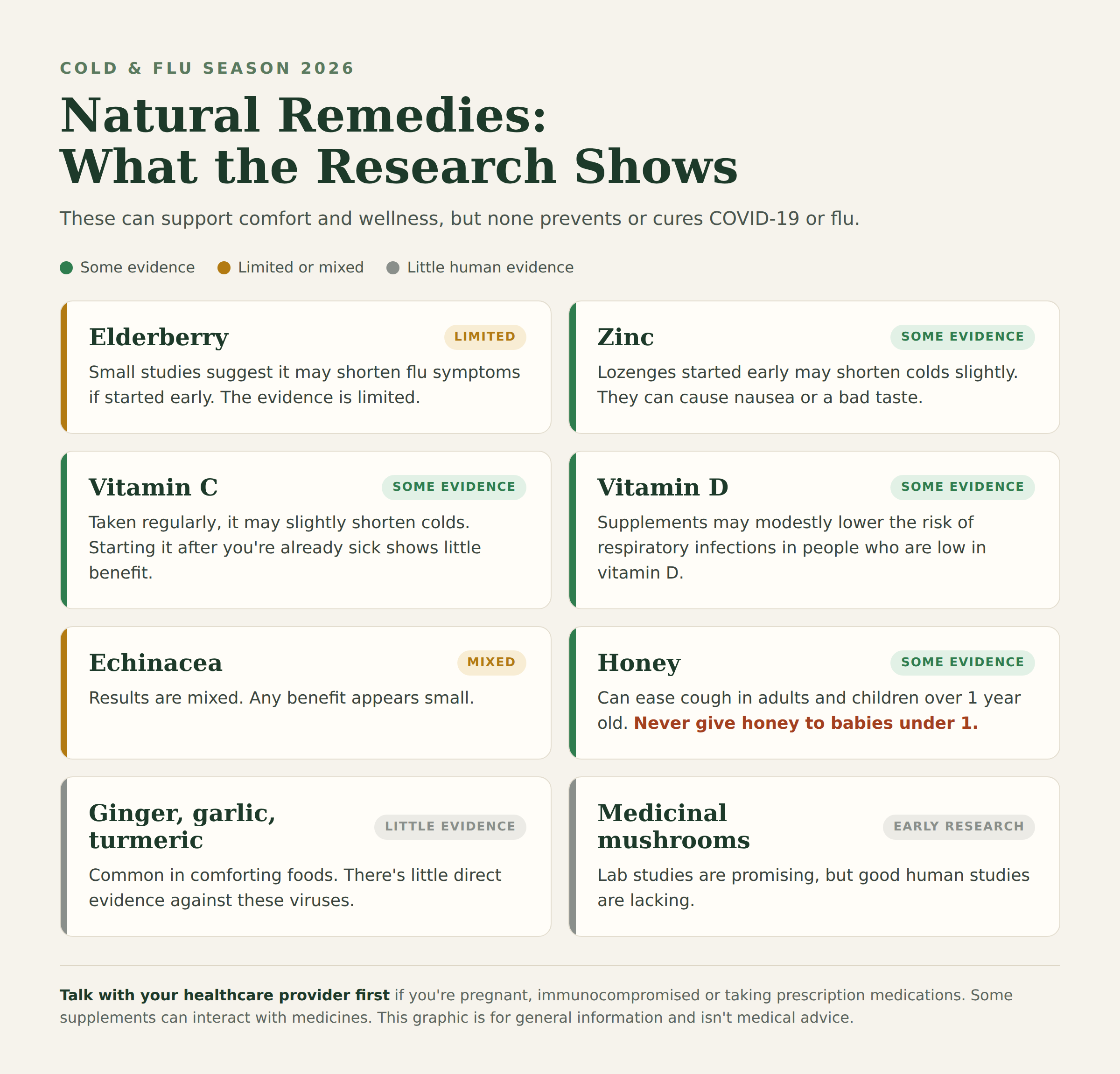
Natural remedies to help your body overcome COVID 19 and Flu
Fun fact: Tamiflu (oseltamivir) has plant roots. It's made from shikimic acid, a compound first taken from star anise. That doesn't make star anise a flu treatment, but it's a good example of nature inspiring medicine.
Treatment: antivirals and home care
Prescription antivirals work best when started early, so call your provider as soon as you test positive, especially if you're at higher risk.
COVID-19 treatment details come from AAMC.
Home care
Rest as much as you can.
Drink plenty of fluids: water, broth, herbal tea.
Use fever and pain relievers as directed on the label.
Watch your symptoms and note when they change.
When to seek care
Call your healthcare provider if you have
A fever lasting more than 3 days
A cough that's getting worse, or chest discomfort
Vomiting that won't stop, or signs of dehydration
Symptoms that improve and then come back worse
A positive test and you're at higher risk, since you may qualify for an antiviral
Go to the emergency room right away if you have
Trouble breathing or shortness of breath
Chest pain or pressure that won't go away
New confusion, or trouble waking up or staying awake
Pale, gray or blue-tinged lips, skin or nail beds
Signs of severe dehydration, such as not urinating
Children, older adults, pregnant people and anyone with a weakened immune system should get care sooner rather than later.
Call 911 in a life-threatening emergency.
Key takeaways
COVID-19's late-summer wave is leveling off. As of September 23, infections were still growing in 14 states.
Flu is low for now but typically builds from October onward. Last season was severe.
Fall is the time to plan your flu shot and to ask your provider whether an updated COVID-19 vaccine fits you.
Antivirals work best early, so test promptly if you feel sick.
Natural remedies can ease symptoms but don't replace medical care.
Frequently asked questions
Is flu or COVID-19 worse this year? It's too early to say for flu. COVID-19 deaths are much lower than in past years, but both can be serious for older adults and people with chronic conditions.
Can I get my flu and COVID-19 shots at the same visit? Yes, getting both at the same time is considered safe. Ask your pharmacist or provider.
Does the flu shot help if the virus changes? Yes. Even when the match isn't perfect, vaccination lowers the risk of severe illness and hospitalization.
Can I treat flu or COVID-19 naturally without seeing a doctor? Many mild cases get better with rest and fluids. If you're at higher risk, contact a clinician early, because antivirals must be started within a few days to help.
Sources
CDC: Interim clinical considerations for seasonal flu vaccines, 2026–27
AAMC: What you need to know about the 2026 COVID late-summer surge (Sept. 2, 2026)
AHCA/NCAL: CDC issues interim guidance for the 2026–27 flu season
Medical Daily: XFG COVID vaccines and eligibility (Aug. 28, 2026)
This article is for general information and isn't medical advice. Talk with your healthcare provider about your situation.